
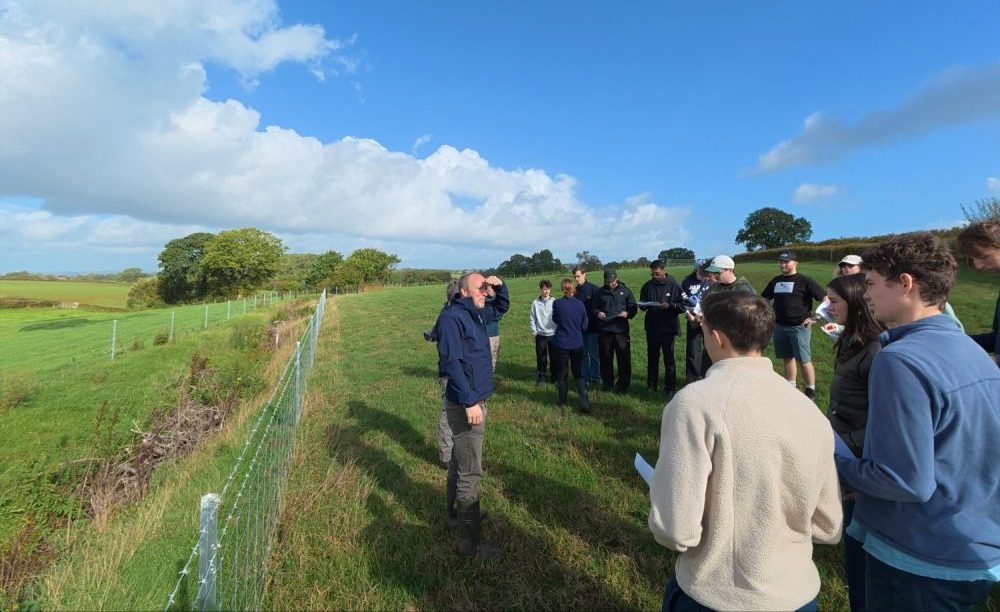
John Hickey, from the Connecting the Culm team, reflects on a visit by Network Rail’s Climate Adaptation and Infrastructure Resilience Team, where graduate engineers and university students explored how nature-based solutions can complement traditional engineering approaches to tackling future climate challenges.
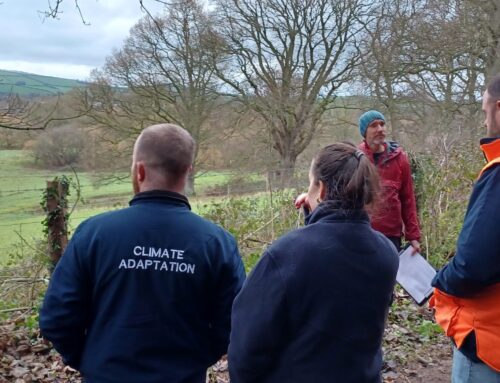
The Network Rail Climate Adaptation and Infrastructure Resilience Team visited the River Culm catchment to see a range of completed and planned catchment resilience works. Network Rail graduates and university students on placement years in industry joined the team for an on-the-ground look at the work being delivered through the Connecting the Culm project.
Building on a previous visit to a hard-engineering resilience scheme on the south coast main line, the visit provided an opportunity to explore how nature-based solutions can complement traditional engineering approaches to improving railway resilience. For the graduates and students, it offered valuable insight into how working with natural processes can help reduce flood risk for critical infrastructure and local communities.
Through the visit, participants gained an understanding of how a catchment-wide network of nature-based solutions had been identified, alongside hydraulic modelling, to target the most effective interventions in collaboration with local landowners and land managers. These key areas, known as Potential Areas of Increased Resilience (PAIRS), identify runoff pathways and opportunities for nature-based solution interventions that can be delivered across the catchment. Working together, this network of measures will help increase resilience while tackling wider issues including flooding, drought, poor water quality and biodiversity loss.

Exploring the Culm Catchment
The catchment tour took in three very different sites, from the headwaters in the Blackdown Hills National Landscape down to the main river floodplain. This provided a valuable opportunity to explore a range of current and potential nature-based solutions and for the Connecting the Culm team to explain the project’s methodology and approach. This included demonstrating how a combination of interventions can break and slow the flow of water across the landscape, from hillslopes and tributaries to floodplains and riparian zones.
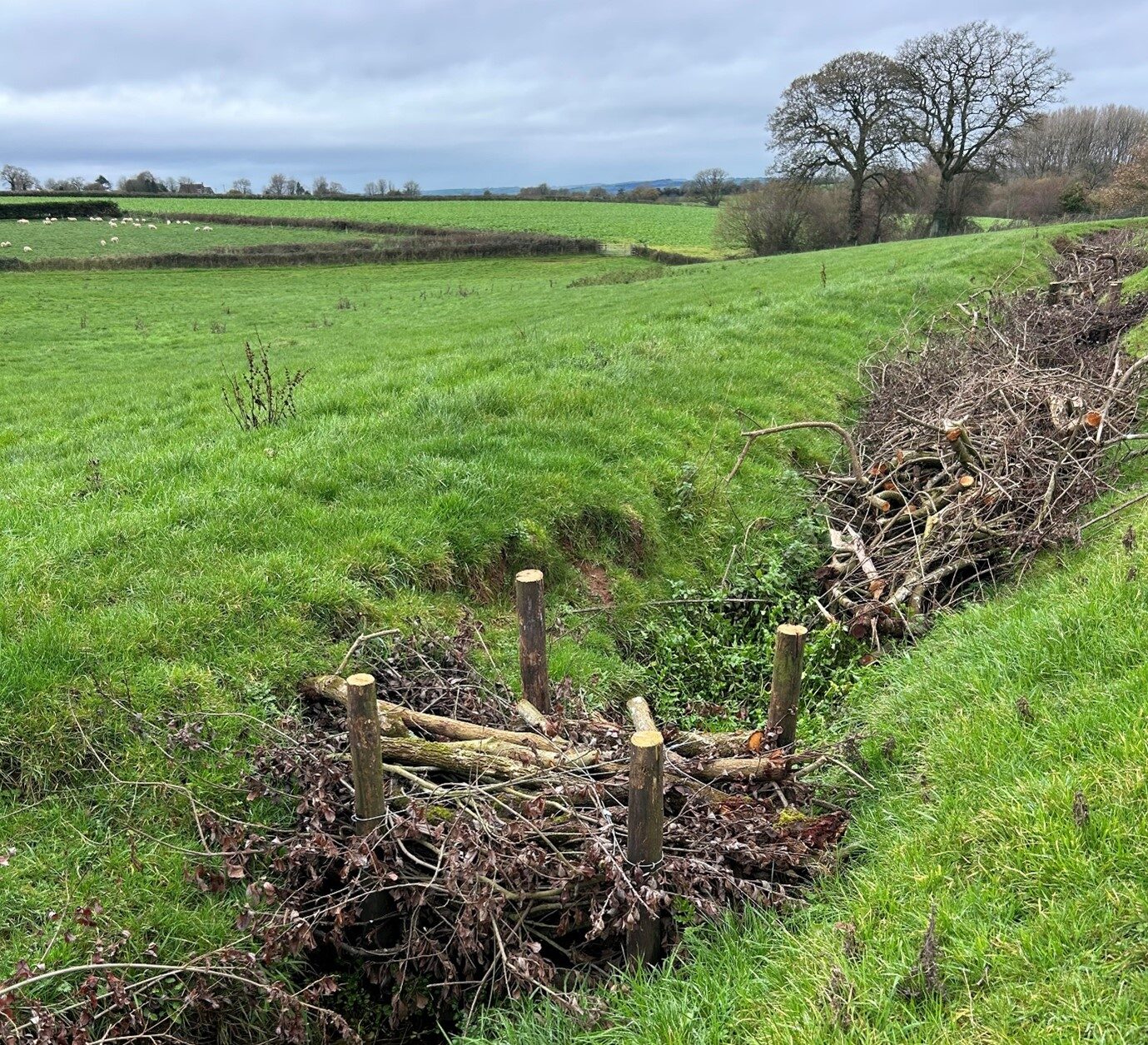
Examples included leaky dams, tree and hedge planting, agroforestry, attenuation ponds, buffer strips and river restoration, all linked with wider farmland and soil management improvements designed to increase infiltration, from temporary cover cropping to longer-term land use change.
Hillslopes and Headwaters
At the first two sites, the group examined a range of both small and large woody leaky dams, as well as riparian buffer strips created through fencing off the watercourse. Previously, these had been intensively grazed fields with open watercourses and banks heavily degraded by livestock access. Recovery was now underway, with grassy buffer strips, restored river channels and woody structures all helping to slow flows and reduce the impacts of runoff. Before fencing was installed, the riverbanks had been restored and regraded, and an array of small and large woody leaky dams had been constructed within the channel.
Looking across the wider hillslopes surrounding the farm, the group could see clear examples of how different land uses and management practices influence infiltration rates and runoff. The connectivity between individual fields and the river network was explained using the source-pathway-receptor approach to understanding land runoff. Visitors learned how cross-slope field features and in-field interventions can be used to interrupt and slow runoff pathways before water reaches the river system.
Examples viewed in the fields included new cross-slope hedgerows, land use change from arable production to agroforestry, field-corner scrapes and water storage attenuation areas. It was explained how these features work together to increase infiltration, slow runoff and improve flood resilience for local communities and infrastructure downstream.
Reconnecting the Floodplain
The final site visit focused on the complementary approach being developed in the lowlands through targeted floodplain reconnection projects. This work is being planned alongside headwaters interventions as part of future works with Network Rail through the Floodplain Reconnection for Railway Resilience (FlooR3) programme. For this approach, a specific methodology has been developed, with any additional water storage capacity measured in Resilience Gain Units.
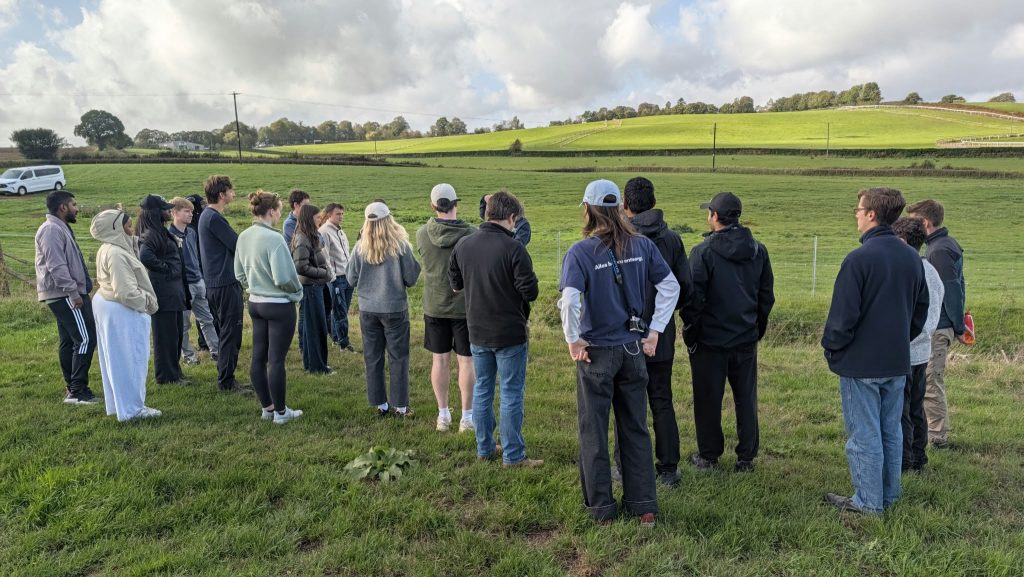
While exploring the floodplain and learning about floodplain reconnection and attenuation features, there was also the opportunity to identify other features of interest, including former river channels, known as palaeochannels. Visitors were challenged to distinguish between a wind-blown willow tree and one coppiced by a European beaver.
Benefits for Nature and Resilience
With a rich variety of wildlife found throughout the River Culm valley, from kingfishers and brown trout to the critically endangered white-clawed crayfish, the visit also highlighted the wider environmental benefits of nature-based solutions. Alongside improving flood resilience, these approaches can support biodiversity, enhance habitats and strengthen the long-term resilience of species populations by working with natural processes across the catchment.
Learning for the Future
For the Network Rail graduates and university students, the visit provided a valuable opportunity to see how nature-based solutions can complement traditional engineering approaches to climate resilience. Exploring projects from the headwaters to the floodplain gave the future engineers first-hand experience of how working with natural processes can help reduce flood risk, improve biodiversity and strengthen resilience for communities and infrastructure, broadening their understanding of the range of tools available to address future climate challenges.




Leave A Comment